Summarize this content to 100 words:
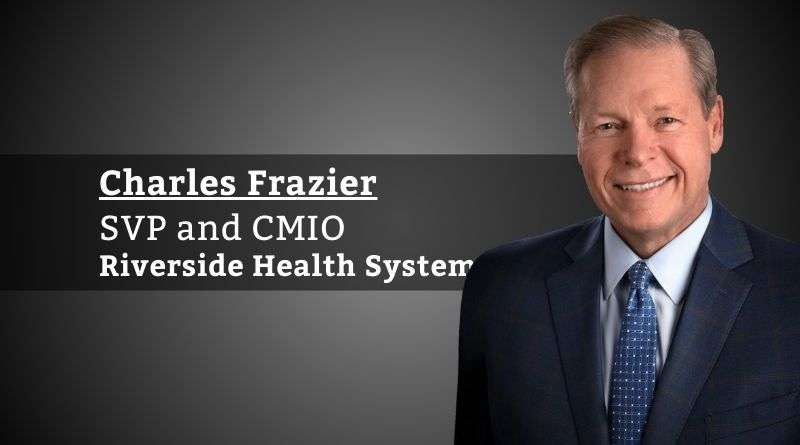
By Charles O. Frazier, SVP and CMIO, Riverside Health
As a CMIO, who has also practiced family medicine for over thirty years, I sometimes feel a little guilty that I don’t use telehealth as much as I should. I do video visits and asynchronous e-visits, and I receive a steady stream of messages through our patient portal (Epic’s MyChart). Still, overall my patients seem to prefer coming into the office to see me in person. There just doesn’t seem to be much pent-up demand for telehealth.
Yet I spend a lot of time thinking about how we can see primary care patients more efficiently, engage them more deeply in their own care, and help them improve and maintain their health, all while keeping them out of the emergency department (ED) and the hospital as much as possible. Primary care clearly improves health and reduces costs, but we are facing a significant shortage of providers in the near future. That reality makes it incumbent upon us to explore different approaches to delivering primary care just as well, if not better, but also more efficiently.
Leveraging patient engagement tools and remote monitoring technologies allows a shrinking primary care workforce to manage more patients more effectively at lower cost.
There is some hope that artificial intelligence (AI) can help address this looming shortage by making each clinician’s time go further, reducing administrative burden, decreasing burnout and turnover, and helping non-provider staff work at the top of their licensure. Telehealth options can also help PCPs see patients more conveniently and efficiently. But another important approach that can expand our reach and improve care is remote patient monitoring (RPM).
RPM comes in many forms. Some are diagnostic: home sleep tests, cardiac rhythm monitoring such as Holter or event monitors, and ambulatory blood pressure monitoring. Traditionally, though, remote patient monitoring referred to devices placed in the homes of medically complex, high-risk patients for several weeks and monitored remotely by clinical staff. For example, a patient with congestive heart failure (CHF) might have a blood pressure cuff and a scale placed in the home, connected to the internet through Wi-Fi or an integrated cellular connection. Staff would then monitor the data for concerning trends so they could intervene before the patient deteriorated and needed readmission.
But what if we encouraged more remote patient monitoring long before patients reached that level of risk? And what if that monitoring were combined with deliberate efforts to engage patients in their own care?
Many patients already use wearables, such as fitness trackers or smartwatches, to monitor steps and heart rate. Those devices usually connect to apps that store and trend the data. We also have continuous glucose monitors, bluetooth-enabled and non-integrated blood pressure cuffs, and scales that transmit data to similar apps. Most of these apps can connect to patient portals and send data directly into the electronic health record (EHR), if the patient chooses. That passive flow of data can be helpful, but the real opportunity lies in combining data collection with structured programs that actively engage patients.
Consider Epic’s Care Companion functionality. This tool combines secure patient messaging with configurable tasks: reminders, brief educational modules, questionnaires, and data-entry prompts. Imagine a health system implementing a hypertension Care Companion plan. The process could begin with an alert in the EHR recommending that a patient with poorly controlled hypertension be enrolled. The provider discusses the program with the patient, gains agreement, and assigns the care plan.
The first task might be a short educational module explaining the program. Suppose the health system had a donor who agreed to fund home blood pressure cuffs. The initial task could ask whether the patient already owns a cuff; if not, the system could trigger an internal workflow to ship one to the patient’s home. Subsequent tasks could cover topics such as the importance of blood pressure control, diet, exercise, how to take an accurate reading with the supplied cuff, and how to connect the bluetooth cuff to the patient’s MyChart app.
The care plan could also send reminders to check blood pressure and pulse daily, three times a week, or at whatever interval is clinically appropriate. In the background, AI could monitor those values. If average blood pressures remained elevated for more than two weeks after the last medication adjustment, the system could notify the provider so the regimen could be reassessed. If the provider had a collaborative practice agreement with a pharmacist, the alert could instead go to the pharmacist, who could contact the patient and adjust the medication under protocol. This cycle could continue until blood pressure is consistently controlled, at which point the frequency of reminders could be reduced.
Think about what such a program accomplishes. You take a patient with a poorly controlled chronic disease, educate them about the condition, its prevention, and its treatment, and you actively engage them in monitoring their own health. You make it easier for the care team to intervene earlier and more precisely. By bringing that patient under better control, you could prevent or delay heart failure, heart attack, kidney failure, and stroke. Instead of relying on intensive home monitoring for a patient who already has heart failure in an effort to avoid hospitalization, you can help prevent the development of heart failure in the first place.
That sort of prevention and health maintenance is the very heart of primary care. Leveraging patient engagement tools and remote monitoring technologies allows a shrinking primary care workforce to manage more patients more effectively at lower cost. Remote monitoring is not a replacement for primary care; it is one of the most promising ways to extend and strengthen it.